Who Are Our Friends? Who Are Our Enemies? Seeds of the Logos, Their Counterfeits, and Openly Deadly Foes
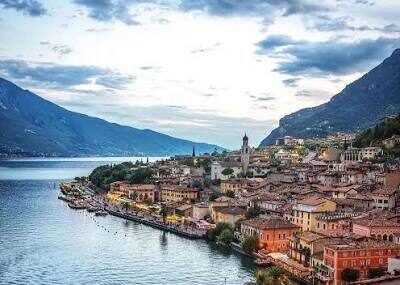
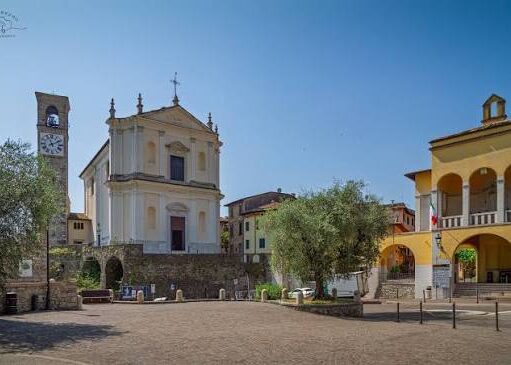
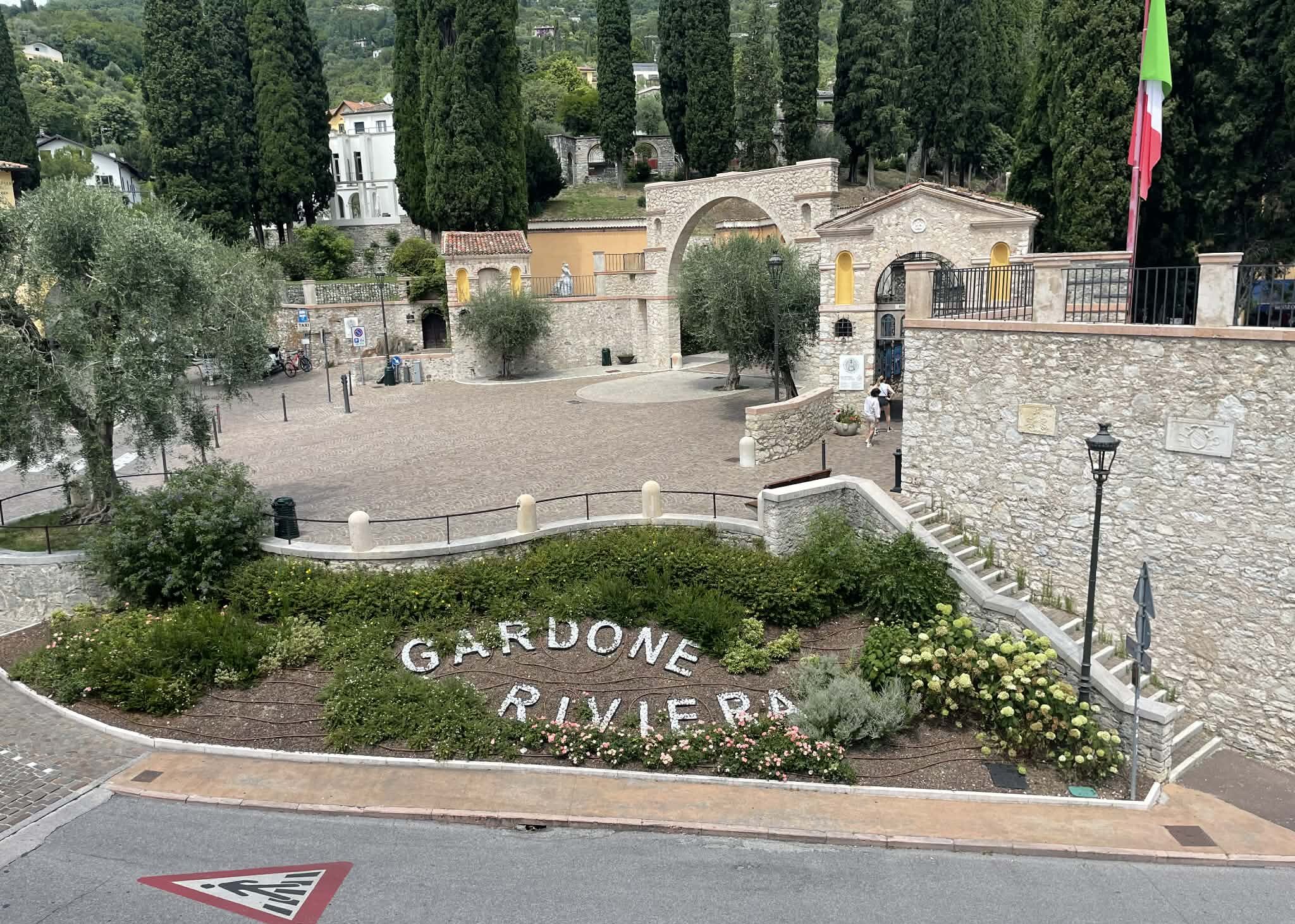
The Thirty-Third Annual Summer Symposium, Gardone Riviera, Italy (June 29–July 10, 2026)
Introduction
There have been many “end times” in the history of the world with which human beings have had to deal. Our own civilization has been confronted by at least four of these eras: the collapse of the Western Roman Empire in the 400s; the violent breakup of a unified European Christendom, brought about through the Protestant Revolution of the sixteenth century; the revolutionary assault on the so-called Ancien Régime, with 1789 as a somewhat inaccurate but nevertheless powerfully symbolic date for the introduction of the worst ravages ensured by modern radical socio-political change; and, finally, the coup de grâce dealt to the remainder of Greco-Roman Catholic culture beginning with the disaster of the First World War of 1914–1918.
While the initial “end time” cited above ultimately proved to be a productive moment, leading to the creation of Medieval Christendom, the latter three all built upon one another to move down the same negative direction. We, in our own lifetime—but especially since the fall of the Soviet Bloc between 1989 and 1991—have now arrived at the nihilistic and criminally ugly dead ending of this five hundred year rush to the destruction of all that is True, Good, and Beautiful. On the level of ideas, there is absolutely nothing further that can be done to dismantle Faith and Reason; nothing more to mock both the eternal supernatural order as well as the created natural realm dependent upon it.
Our last four Summer Symposia, from 2022-2025, have already treated aspects of this tragic history. Although they indeed provided a solid theoretical framework for studying its development, we felt at the end of this year’s session that we needed to tackle the problems with which it presents Catholics in a much more practical manner: one suitable to guiding the militant action in every realm of life that we believers are now utterly incapable of escaping.
Basically, what this means is providing this year’s Summer Symposium participants a precise identification of which of the forces that seem to be upset with the “Established Disorder” around us might truly be suitable allies as new “Seeds of the Logos”; which are choked by weeds that need uprooting lest they prove fruitless in their nonetheless honorable reaction to what is evil; and which are, in fact, outright frauds—-counterfeits of positive thought and action—-disguising their enmity behind a show of friendship. What this also means is a clear identification of all those forces that openly pride themselves on an implacable opposition to all the dictates of Faith and Reason; an opposition that can only be confronted by hurling at each of them what Dietrich von Hildebrand called “those glorious words anathema sit”.
In other words, we cherish the hope this summer of handing down a sound judgement on every important contemporary phenomenon, entity, and person that we possibly can, with reference to their value for the building of the Social Kingship of Christ, or their differing degrees of lack thereof: varied theological, pastoral, philosophical, scientific, mathematical, psychological, and sociological positions; the visions of specific political parties and social movements; the work of international organizations, NGOs, and the policies of the American, European, Russian, and other governments throughout the globe; the actions of individuals, both clerical and lay. For, as St. John Chrysostom teaches us, “it is for the whole earth that we are legislating, and it is a polis that we are founding” (J-M. Mayeur, ed., Histoire du Christianisme, II, 713), and we need to act with a full awareness of the reality around us to achieve such a profound task effectively.
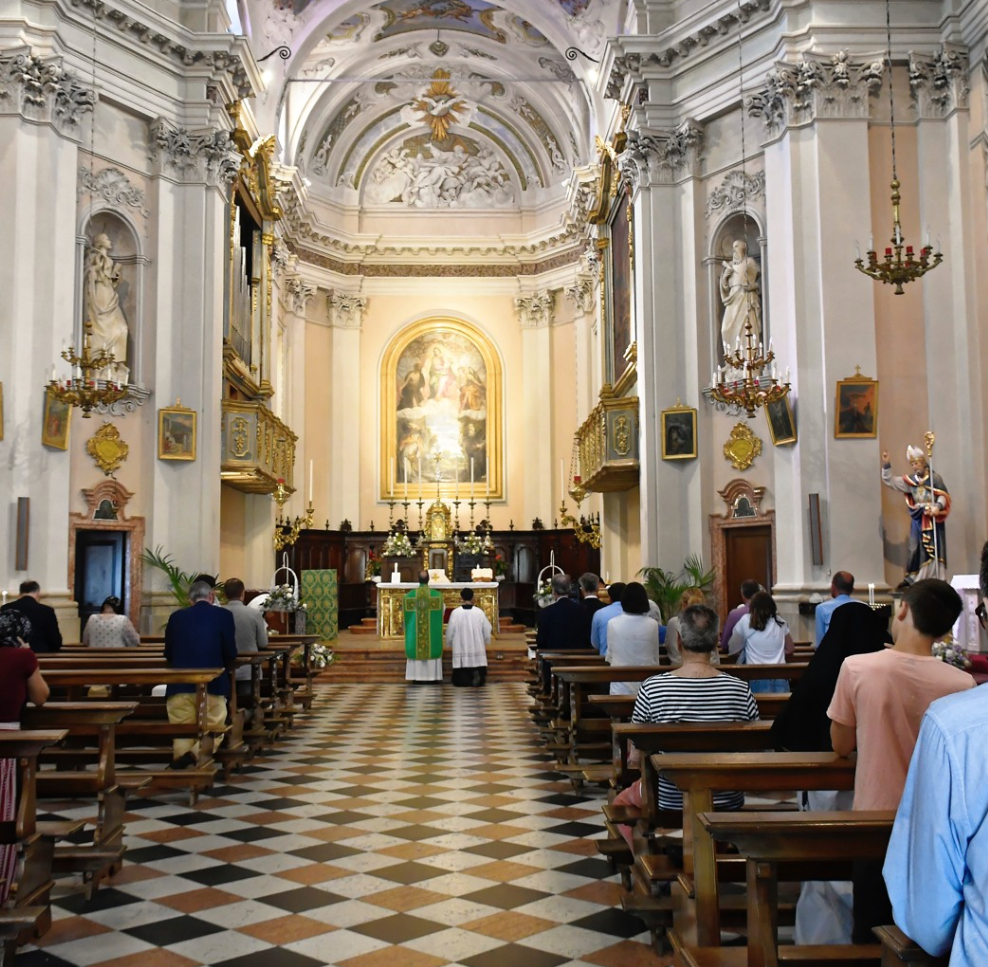
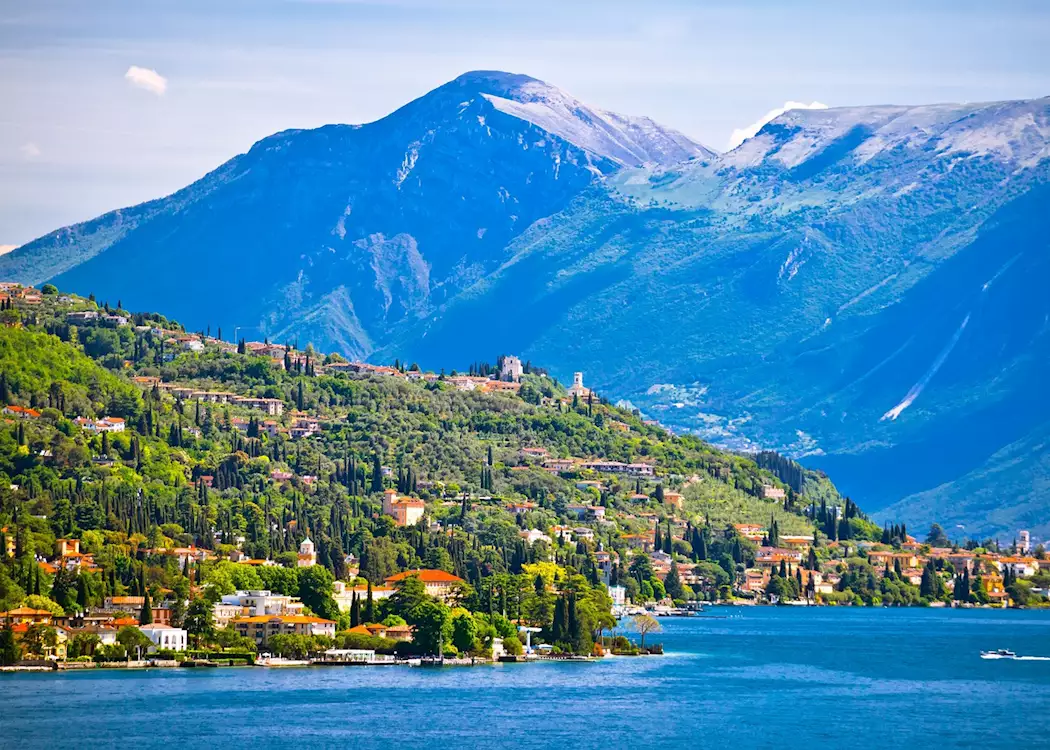
We intend to approach this work charitably—-once again, in the spirit of Dietrich von Hildebrand, who taught the Roman Forum that we must follow the scriptural command to test everything that comes onto our path during our pilgrimage to eternity and judge accordingly. And we will do this, as always, in our “second home” of Gardone Riviera, with its pilgrimage-like, “time out of time” atmosphere of spiritual and fraternal Catholic joy that makes such a work of charitable judgment feasible.
Our project is well expressed in a passage that I often cite from Ernst Jünger’s On the Marble Cliffs: a novel which in 1939 dealt with an earlier stage of that same five hundred year “end time” which confronts us still more dramatically today; an “end time” that, by the grace of God and through our labors, may yet be replaced with a new and still more beautiful Christendom for our descendants.
Now battle had to be joined, and therefore men were needed to restore a new order, and new theologians as well, to whom the evil was manifest from its outward phenomena down to its most subtle roots; then the time would come for the first stroke of the consecrated sword, piercing the darkness like a lightning flash. For this reason individuals had the duty of living in alliance with others, gathering the treasure of a new rule of law. But the alliance had to be stronger than before, and they more conscious of it.
Faculty
Jonathan Arrington (Professor for the Discalced Hermits of Our Lady of Mt. Carmel)
Dr. Miguel Ayuso Torres (Universidad Pontificia Comillas, Spain)
James Bogle, Esq. (Barrister and author of A Heart for Europe, United Kingdom)
Dr. Danilo Castellano (University of Udine, Emeritus, Italy)
Dr. Rudi di Marco (University of Udine, Italy)
Bernard Dumont (Editor, Catholica, France)
Christopher A. Ferrara, J.D. (President, ACLA; Thomas More Society)
Dr. Rudolf Hilfer (University of Stuttgart, Germany)
David J. Hughes (Director of Musical Program)
James Kalb, Esq. (Author of The Tyranny of Liberalism)
Michael Krupa (Journalist, Poland)
Pawel Lisicki (Editor, Do Rzecezy, Poland)
Dr. Maurizio Milano (Economist, Journalist)
Dr. Sebastian Morello (St. Mary’s University, United Kingdom)
Rev. Dr. Richard Munkelt (Chaplain of the Roman Forum)
Judge Andrew P. Napolitano (Syndicated columnist and author)
Dr. Thomas Pink (King’s College, United Kingdom)
Dr. John C. Rao (Chairman, The Roman Forum)
Mr. Nicholas Rao (St. Louis University)
Dr. Thomas Stark (Philosophical Studies, Germany)
Dr. Massimo Viglione (Historian, Confederazione Triarii, Italy)
James Vogel (Editor, The Angelus Magazine)
Frank Wright (Journalist, Life Site News)
“Even if the wounds of this shattered world enmesh you, and the sea in
turmoil bears you along in but one surviving ship, it would still befit you to
maintain your enthusiasm for studies unimpaired. Why should lasting
values tremble if transient things fall?” (Prosper of Aquitaine)